North of the lake, an older Pokhara grew up around trade. Walk its streets of brick Newar houses, climb to the temple on its hill, and finish with the story of the mountains at the museum.
Getting there: Taxi or local bus north from Lakeside
Bring: Covered shoulders, small notes, walking shoes, water
Mountain view: Machhapuchhre can be seen from Bindhyabasini's hilltop on clear dry-season mornings; clouded over most monsoon days.
Most visitors to Pokhara spend their days by the lake, but the city's older heart lies a few kilometres to the north-east. This is the old bazaar, the trading quarter that grew up long before the lakeside became a place to visit. Here the streets are narrower, the buildings older and the pace a little more local. Above them, on a small hill, stands Bindhyabasini temple, one of the most important places of worship in the city.
A trading town on an old route
Pokhara sat on trade routes linking the high country to the north with the plains to the south. Salt from Tibet came down through the mountains, and grain and goods from the south went up. Newar merchants, traders and craftspeople from the Kathmandu valley settled here and built shops and homes along the main streets. The old bazaar was their quarter.
Their buildings are the reason to walk here. Look for brick houses of two or three storeys with carved wooden windows, small balconies and tiled roofs, in the style of the Kathmandu valley towns. Many have been rebuilt or replaced by concrete, but enough survive to show the old pattern of a shop on the ground floor and a family home above. Walk slowly, look up, and you start to pick them out.
The old bazaar is still a market. Small stores sell cloth, brass and copper pots, spices, grain and household goods, and the streets fill with shoppers in the late morning. It feels very different from the lakeside, with its focus on visitors. Here the city is going about its own business, and you are simply passing through.
The Bhimsen temple
In the old bazaar stands a small two-storey pagoda temple dedicated to Bhimsen, a deity especially honoured by Newar traders as a protector of merchants. It is thought to be around two centuries old. Its roof struts carry carvings, including erotic figures, a feature found on many Newar temples. It is a working temple at the centre of a busy neighbourhood, and people stop to make offerings as they pass.
Show the same respect as at any active shrine: do not touch the images, and ask before photographing anyone at prayer.
Bindhyabasini temple on its hill
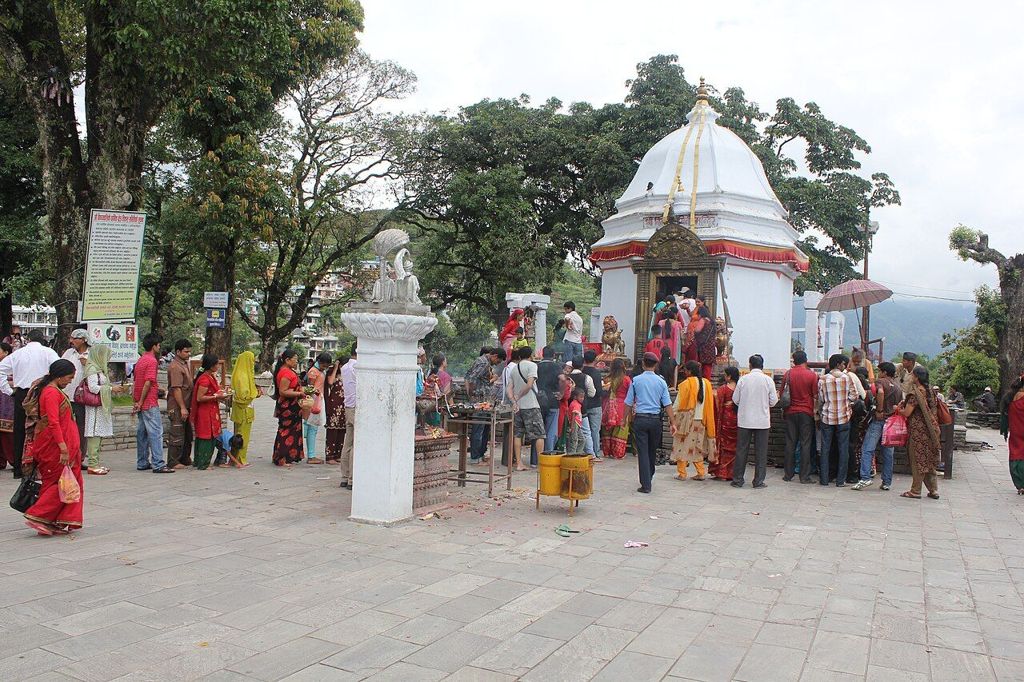
At the northern edge of the old bazaar, a flight of steps climbs to a small hilltop with a paved courtyard and a cluster of shrines. The main temple is dedicated to Bindhyabasini, a form of the goddess Durga, also worshipped as Bhagawati. Its white, domed tower stands out among the trees. Local tradition holds that the goddess was brought here from Vindhyachal in India, which gives the temple its name.
Also by the lake: Begnas and Rupa, the quieter lakes
The temple is busy and alive. Saturdays and Tuesdays draw the largest crowds, along with the Dashain festival in autumn, when queues of worshippers line the courtyard. Animal sacrifices are sometimes made on important days; if this is likely to upset you, visit on an ordinary weekday morning. Smaller shrines around the courtyard honour other deities, and there are shady trees and benches to sit beneath.
On a clear morning in the dry season, the hilltop offers a view north to Machhapuchhre, framed by the trees. It is a different angle on the mountain you see from Phewa Lake, with the city all around instead of the water.
Temple manners
- Remove your shoes where others do, usually before the inner courtyard or shrine.
- Cover shoulders and knees, and dress modestly.
- Leather items may be unwelcome close to the main shrine; follow any signs.
- Walk around shrines clockwise, and do not step over offerings.
- Non-Hindus may not be allowed into some inner shrines; respect this without argument.
- Keep voices low, and do not photograph people at prayer without asking.
The International Mountain Museum
To the south of the city, near the airport, the International Mountain Museum tells the story of the Himalaya and of the people who live among and climb its peaks. Its galleries cover the great mountains of Nepal and the world, the history of Himalayan mountaineering, and the cultures, homes and dress of mountain communities. There are also displays on geology, wildlife and the environmental pressures facing high places.
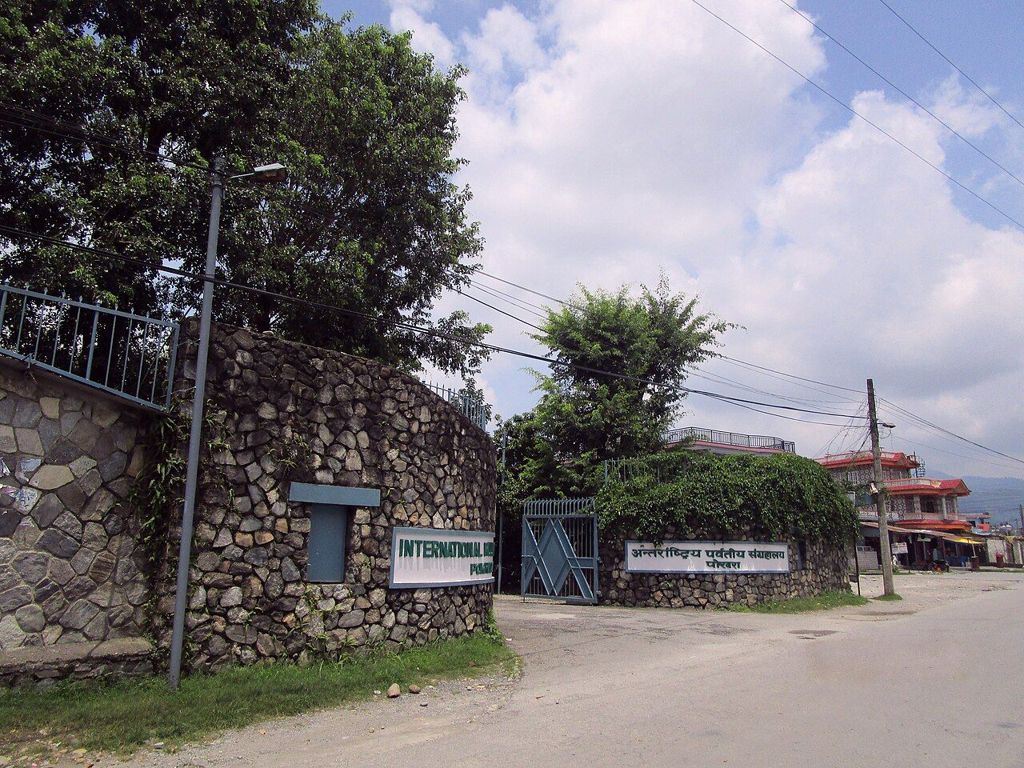
The museum is a good place to understand what you are looking at from viewpoints such as Sarangkot at sunrise, and it makes a useful rainy-day choice in the monsoon. Allow at least a couple of hours.
Planning the visit
The old bazaar is a short taxi ride or local bus journey from Lakeside. A comfortable plan is to start early at Bindhyabasini, when the light is soft and worshippers arrive, then walk down through the old streets and past the Bhimsen temple before the traffic builds. Visit the museum in the afternoon.
The streets of the old bazaar are busy with traffic, and pavements are narrow or missing in places, so walk carefully. Go with no fixed route and let the old houses lead you. If you want to see where the river that drains the lake ends up, Davis Falls and Gupteshwor Cave are on the same southern side of the city as the museum.
Early mornings are the best time for photographs of the old houses, when the streets are quieter and the light falls along them. Ask before photographing people in doorways or shops, and accept a refusal with good grace.