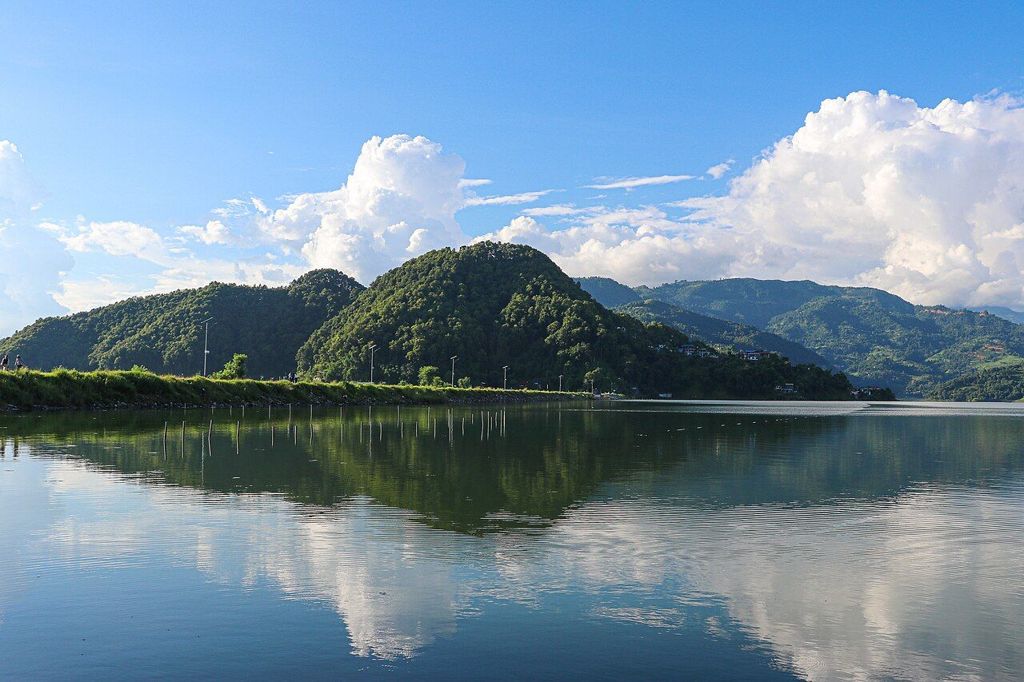
East of the city, two smaller lakes lie on either side of a forested ridge. Fewer people come here, the shores are farmed, and the walk between them takes you through villages and terraces.
Getting there: Local bus or taxi east from Pokhara
Bring: Walking shoes, water, snacks, sun hat, small notes
Mountain view: Annapurna peaks rise above Begnas on clear dry-season mornings; monsoon cloud usually hides them for weeks.
Pokhara is often described as a city of one lake, but the valley holds several. Phewa is the famous one. To the east of the city, in what used to be the separate town of Lekhnath, lie Begnas and Rupa: two calmer lakes separated by a forested ridge. Begnas is the larger of the pair and the second-largest lake in the Pokhara valley. Rupa is smaller and more enclosed, ringed by farmland and woods.
They make a good day away from the busy Lakeside shore. You can sit by the water, row a boat, walk the ridge between the lakes, and see how farming and fishing still shape the landscape here.
Do not expect a resort strip. The lakes are working water, used for fishing, irrigation and daily life, and their shores are mostly fields, woods and scattered houses. That is the appeal.
Begnas lies roughly 15 kilometres east of the centre of Pokhara. Local buses run out from the city towards Begnas Bazaar, the small market town at the end of the road near the lake's southern shore, and taxis make the trip in well under an hour depending on traffic. For Rupa, the usual approach is from the main road between the city and Begnas, with a turn-off that leads down towards the lake.
Many visitors simply go to Begnas Bazaar, walk the short distance to the shore, and spend a few hours on and around the water. A full day lets you add the walk over the ridge to Rupa.
Begnas, the bigger lake
At the southern end of Begnas, an embankment holds back the water, and a walking path runs along it. This is the main gathering point, with boats tied up along the shore and a view up the lake towards the hills. Boats can be hired here; as at Phewa, agree the price and time before you set off, wear a life jacket.
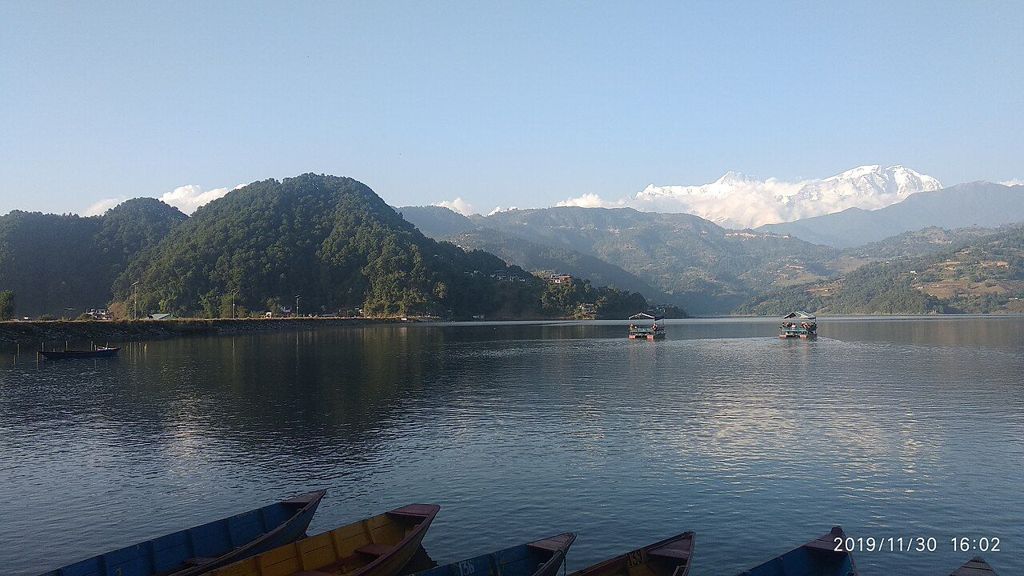
Beyond the embankment the lake winds back into green hills, with farmed slopes coming down to the water. On a clear morning in the dry season, the snow peaks of the Annapurna range appear above the ridges to the north. Compared with the view from Phewa Lake, the scene is quieter and more rural, with few buildings on the far shores.
Fish farms and terraces
Fishing has long been part of life on these lakes. On Begnas you will see fish farming in the water near the shore, with cages and nets used to raise fish, and small fishing boats working the lake. The water and the fish it supports matter to the local economy, so do not interfere with nets or cages when you are out on a boat.
Around both lakes, the slopes are cut into terraces. Rice is grown on the lower, wetter terraces in the monsoon, and other crops follow in the drier months. In late summer the terraces are deep green; after the harvest in autumn they turn gold and then bare. The patterns of terraces running down to the water are one of the best reasons to come.
Also by the lake: The World Peace Pagoda above the lake
Rupa, the smaller lake
Rupa lies to the south and west of Begnas, on the other side of the ridge. It is smaller, shallower and more sheltered, with reeds and water plants along its edges and farmland all around. Local community groups have worked on conserving the lake and its fish, and the shoreline feels less developed than Begnas.
The lake is a good place for birds, especially in the cooler months, when you may see herons, kingfishers and waterfowl around the reeds. Bring binoculars if you have them. Keep to the paths along field edges, and respect the farmland: do not cut across planted terraces.
The ridge between the lakes
The forested ridge that divides Begnas from Rupa is known as Panchabhaiya Danda. Paths climb onto it from the Begnas side and run along the crest, with views down to both lakes, then descend towards Rupa. The walk passes through woodland, small settlements and fields, and it can be done in a few hours at an easy pace, depending on your route and how often you stop.
Paths are not always signposted, and new tracks appear as roads are built. In the monsoon the paths can be muddy and leeches appear in the forest, so the walk is best in the dry season. If you enjoy this kind of walking, the trail down from the Sarangkot viewpoint makes a good second outing.
October to March brings the clearest weather, cool mornings and the best chance of seeing the mountains. Spring is warmer and hazier but pleasant on the water. In the monsoon, from about June to September, rain falls most days and the peaks are usually hidden, but the terraces are at their greenest and the lakes are full.
Weekdays are quieter than weekends and public holidays, when city families come out for the day. Go early for calm water and clear views. Back in the city, the old bazaar and Bindhyabasini temple make a good contrast to a day among fields and fish farms.
Carry what you need for the day, since facilities thin out once you leave the bazaar and the embankment. Take any rubbish back with you; the lakes have no one to clear up after visitors on the far shores.