Pokhara grew up beside this long, green lake. Hire a wooden boat early, row out to the small temple on its island, and watch the Annapurna peaks appear in the water on a clear morning.
Getting there: Walk to the eastern shore from Lakeside
Bring: Sun hat, water, small notes, a light rain jacket
Mountain view: Machhapuchhre and the Annapurnas often reflect on still autumn and winter mornings; cloud hides them through most of the monsoon.
Phewa Lake, often written Fewa, is the reason most people come to Pokhara and the reason most of them stay longer than planned. It is the second-largest lake in Nepal, a long sheet of water lying at the foot of forested hills on the western side of the city. The eastern shore, known as Lakeside, is where the town meets the water. The southern shore rises steeply into woodland, and on its ridge sits the white dome of the World Peace Pagoda. To the north, when the sky is clear, the snow peaks of the Annapurna range stand above everything.
This is a lake for slow hours. You row, you drift, you sit on the shore and watch the light change. The guide below covers the boats, the island temple, the mountain mornings and what the lake is like in each season.
The wooden doongas
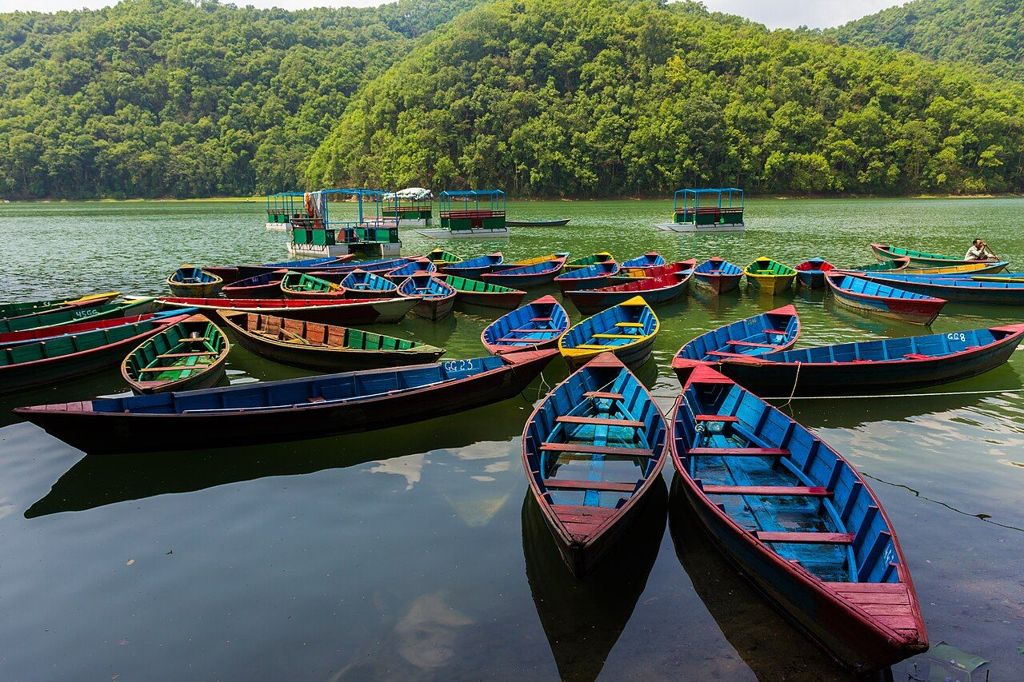
The boats on Phewa are called doongas: long, flat-bottomed wooden craft painted in strong blues, reds, greens and yellows. They line the shore along Lakeside and gather in clusters near the landing points, tied together in loose rafts. Some are rowed by boatmen and some you can row yourself. Pedal boats and small sailing dinghies also work the lake, but the painted doongas are the ones that define it.
Boat hire is organised along the shore, and prices are generally set by the hour, with different rates for hiring a boatman or rowing on your own. Life jackets should be provided; ask for one if it is not handed to you, and wear it. The lake is deep in places, and afternoon wind can raise a surprising chop.
Rowing is easy on a calm morning. Keep well clear of the paragliders' landing area on the shore and of the dam at the southern end, where the lake drains out through a sluice into the Pardi Khola. That river soon disappears into the ground at Davis Falls and Gupteshwor Cave, a short ride south of the lake.
Tal Barahi, the temple on the island
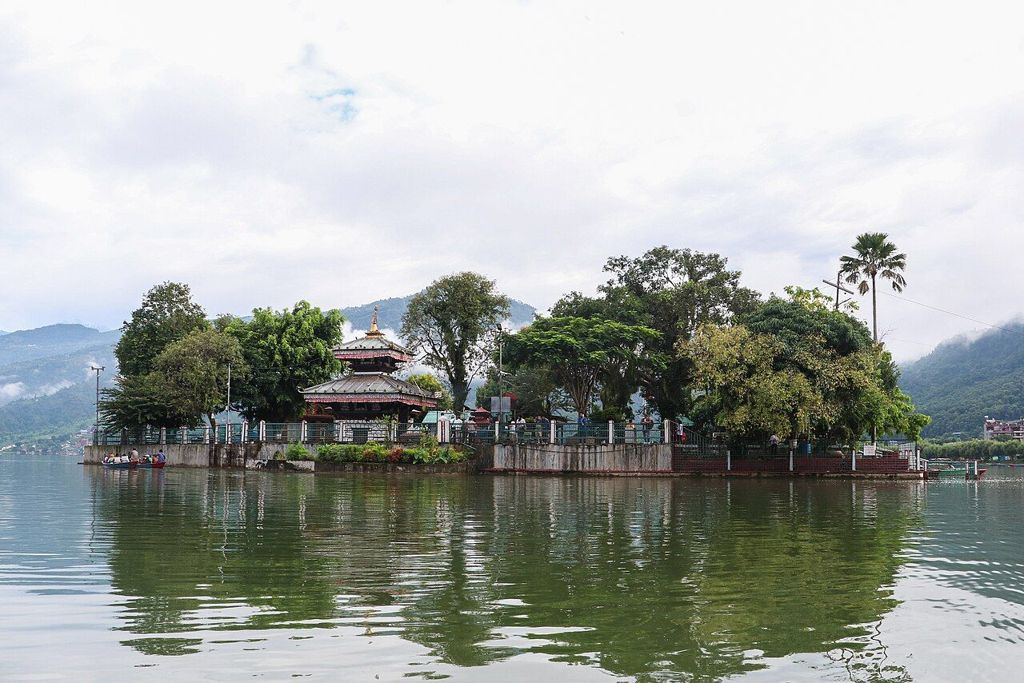
A short row from the Lakeside shore, a small wooded island holds Tal Barahi temple, a two-tiered pagoda-roofed shrine dedicated to the goddess Barahi, a protective form of the divine mother. It is an active Hindu temple, not a museum, and it is one of the most important places of worship in the city. Ferries run back and forth from the shore through the day, and you can also reach it in a hired doonga.
Saturdays are the busiest day, when families come to make offerings, and the queue to the shrine can be long. Festival days draw larger crowds again. Weekday mornings are calmer.
Dover shoulders and knees, as you would at any working shrine. Follow the flow of worshippers around the shrine rather than cutting across it, and step aside for anyone carrying offerings. Non-Hindus may not always be welcome in the innermost part of a temple; watch for signs and follow what local worshippers do. Photography of people at prayer is best avoided unless you have asked first.
Mountain mornings on the water
The view that made Phewa famous is Machhapuchhre, the steep fish-tailed peak north of the city, reflected in still water at dawn. It depends entirely on the weather. On clear mornings after the monsoon, from about October into the winter, the summit often stands out sharply in the first light, and the lake is glassy before the wind comes up. By late morning haze and cloud usually build and the peaks fade.
Also by the lake: Sunrise at Sarangkot
The western end of the lake is quieter than the Lakeside shore, with fields and small settlements running down to the water. Rowing a little way out from the busy landings gives a wider view, with the hills folding back towards the mountains. If you want the full panorama rather than a reflection, the viewpoint at Sarangkot on the ridge above the northern shore shows the range from end to end.
Sunset and the evening shore
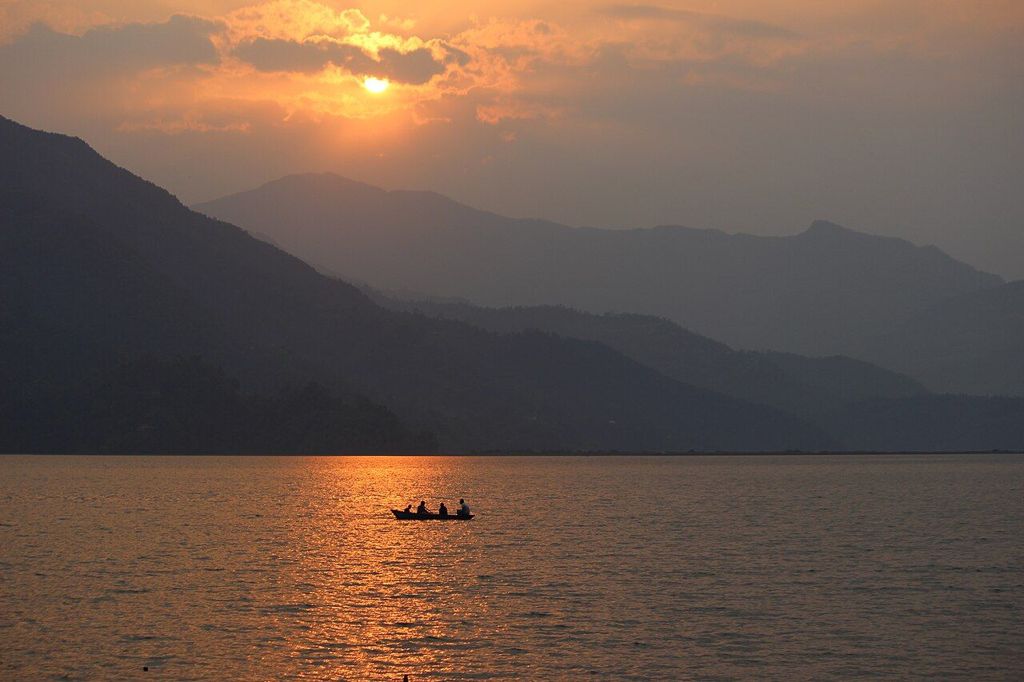
Evenings belong to the eastern shore. The sun drops behind the western hills, the water turns orange and then grey, and the last boats come in. Benches and grassy patches along the lakeside path fill with people watching the light. In the dry months the sun often sinks into a band of haze, which softens the colours without hiding them.
Walk the shore path south towards the dam or north past the quieter stretches as the light goes. It is flat, easy walking, and it gives you a sense of how the town and the lake fit together.
The lake through the year
Autumn, from October to early December, brings the clearest skies and the best mountain views, and it is also the busiest season. Winter mornings are cold and often misty on the water, with the mist lifting to reveal the peaks. Spring is warm and hazier; the views come and go, but the hills turn green and the rhododendrons flower on the higher ridges.
The monsoon, roughly from June to September, changes everything. Heavy rain falls most days, often in the afternoon and night, the hills disappear into cloud, and the mountains may stay hidden for weeks. The lake itself is still lovely in a soft, grey way, and boating continues between showers, but come for the water and the green rather than the view.
- Lakeside is walkable, and most of the boat landings are on its shore.
- Carry small notes for boat hire and temple donations.
- Sun on the water is strong even in winter; bring a hat and sunscreen.
- Go early for calm water and clear views, and late for the sunset.
From the southern shore, a forest path climbs to the World Peace Pagoda, and many people combine the two in a single morning: row across, walk up, and return by boat or on foot.