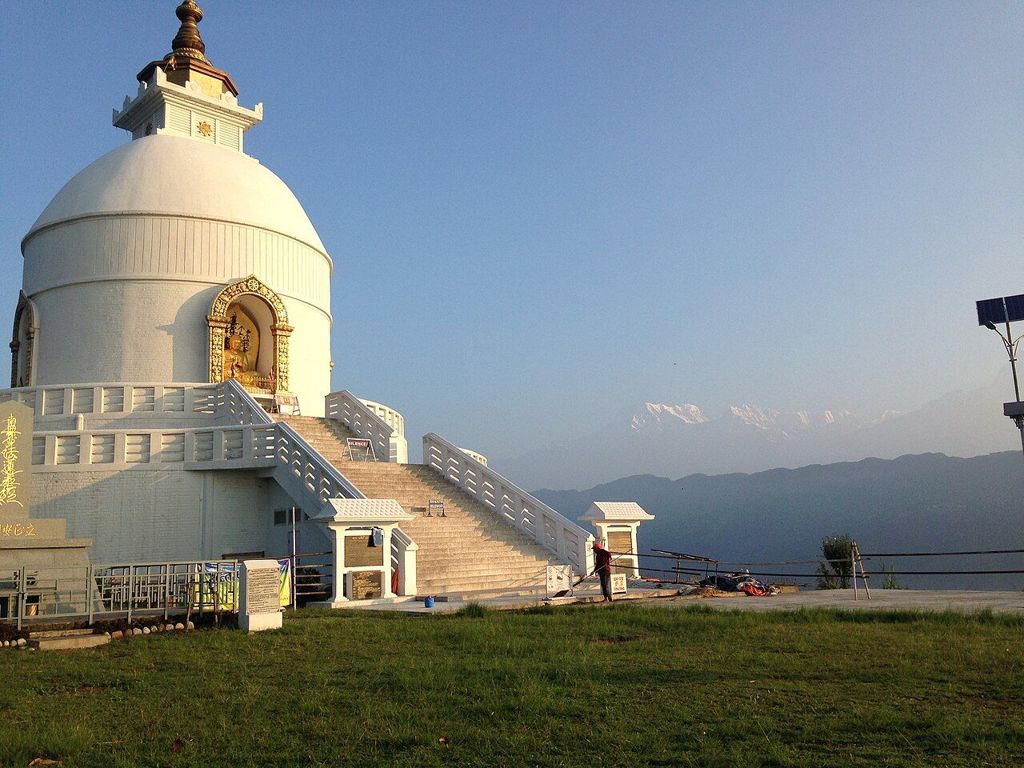
A white stupa sits on the ridge south of Phewa Lake, high above the water. Reach it on foot through the forest, look north to the Annapurnas, and keep your voice low at the top.
Getting there: Boat across Phewa, then forest path up
Bring: Good shoes, water, covered shoulders, socks for the terrace
Mountain view: Annapurna peaks and Machhapuchhre show clearly on dry-season mornings; summer cloud usually hides them by midday.
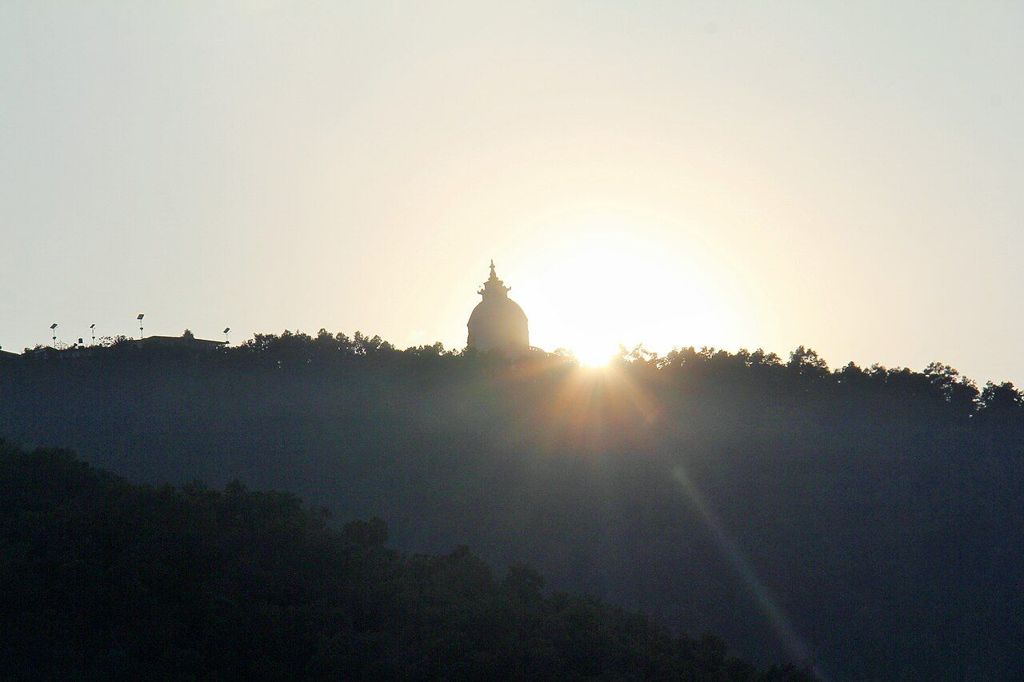
From almost anywhere on the Lakeside shore of Phewa Lake you can see it: a small white dome on the wooded ridge across the water. This is the World Peace Pagoda, also called the Shanti Stupa, a Buddhist monument built by a Japanese Buddhist order that has raised similar peace pagodas in several countries. It stands at roughly 1,100 metres, well above the lake, and its terrace gives one of the widest views in Pokhara: the lake and the city below, and the Annapurna range beyond them to the north.
Getting there is part of the point. The most popular route combines a boat crossing with a climb through forest, and it turns a monument visit into a proper half-day outing.
The stupa itself
The pagoda is a broad white dome on a raised, stepped base, topped with a gilded spire. Set into the dome are gilded figures of the Buddha in decorated niches, each facing a different direction. A flight of white steps leads to an upper walkway that circles the dome. The whole structure is kept bright white, and on a sunny morning it is dazzling against the sky.
It is a place of worship and of quiet reflection, not just a viewpoint. A small monastery sits nearby, and you may hear drumming and chanting at times. The stupa is meant to encourage peace, and the atmosphere on the terrace reflects that.
Seen from the lake, the stupa looks small and far away. Up close it is larger than most people expect, and the white walls throw back the light so strongly that sunglasses help on a bright day. Morning is the calmest time, before groups arrive by road.
Walking up from the lake
The classic approach starts on the water. Hire a boat on the Lakeside shore, as described in our guide to Phewa Lake and its wooden doongas, and cross to the landing on the southern shore. From there a path climbs steeply through the forest. It is mostly steps and rough stone, shaded by trees, and most people take somewhere between forty minutes and an hour to reach the top at a steady pace. Small settlements and tea stops appear along the way.
The path is steep and can be slippery after rain, so wear shoes with grip rather than sandals. Start early in the day to climb in cool air and catch the clearer morning views. Agree with your boatman whether they will wait or come back for you, and at what time, before you set off.
The dam-side route and the road
There is a second way up from the south-eastern end of the lake, near the dam where the Pardi Khola flows out. Paths from this side climb through forest and small fields to the ridge. It is a good route if you prefer to stay on foot the whole way, or want to come down a different way from the one you went up.
A road also reaches a point near the top, with a short walk and some steps to finish. This suits anyone who cannot manage the full climb. Taxis can take you up, and a popular plan is to ride one way and walk the other.
Also by the lake: Davis Falls and Gupteshwor Cave
The view from the terrace
The reward for the climb is the panorama. Below you, Phewa Lake spreads out with the city on its eastern shore and the painted boats as specks on the water. Beyond, on a clear day, the snow peaks of the Annapurna range line the northern horizon, with the sharp point of Machhapuchhre standing out among them. To the east lies the valley, and on the hill across it you can pick out the ridge of Sarangkot and its viewpoint.
The mountains are clearest in the dry months, from October through the winter, especially in the early morning. In spring the views are often softened by haze, and in the monsoon cloud usually covers the peaks. The lake view is good in any season.
Dress and quiet
The pagoda asks visitors to treat it as a sacred place. A few simple habits help:
- Cover shoulders and knees. Carry a light layer if you walk up in hot weather.
- You may be asked to take off your shoes before climbing to the upper walkway; follow any signs and leave them where indicated.
- Walk around the stupa clockwise, as is customary at Buddhist monuments.
- Keep your voice low. Calls, music and loud groups are out of place here.
- Do not climb on the stupa, railings or statues for photographs.
- Rules on drones and photography may apply; check any notices at the site.
There is no need to be nervous about any of this. A respectful, quiet visit is all that is expected.
Planning the half day
A comfortable plan is to start soon after sunrise, cross the lake, climb to the pagoda, spend half an hour on the terrace and then walk down the other side towards the dam. From there it is a short ride to the waterfall and caves on the city's southern edge. Bring water, as the climb is warm even in winter once the sun is up.
If you only have a short time in Pokhara, this walk gives you the lake, the forest and the mountains in one morning, which is a fair summary of the place.
Coming down, take your time on the steps. Knees feel the descent more than the climb, and the stone can be loose in places. If you return by boat, the crossing back to Lakeside is a pleasant way to cool off, with the ridge and its white dome behind you.