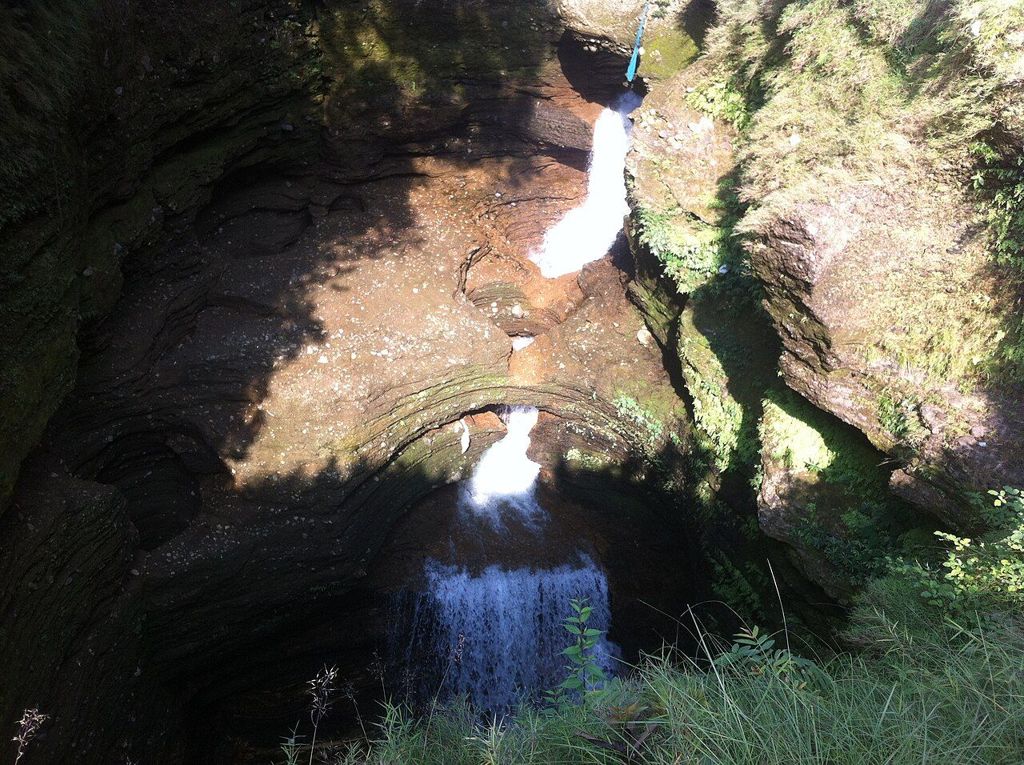
On the southern edge of Pokhara, the river that drains Phewa Lake plunges into a narrow gorge and vanishes. Across the road, a cave shrine leads down towards the same water from underneath.
Getting there: Short taxi ride south of Lakeside
Bring: Grippy shoes, light rain jacket, small notes, torch
Mountain view: Few mountain views here; the falls sit low in the valley, so come for water rather than peaks.
Phewa Lake drains out at its southern end through a dam into a small river, the Pardi Khola. A short way downstream, on the edge of the city, that river does something strange. It pours into a narrow, deep slot in the rock and disappears underground. The place is known to most visitors as Davis Falls. Its local name is Patale Chhango, which means something like "the underworld waterfall", a fair description of water that falls into darkness.
Across the road from the falls is Gupteshwor Mahadev Cave, a Hindu shrine to Shiva set deep inside a cave system. Its passages lead down towards the same river from below. The two sites make a short, unusual outing, best in the weeks after the monsoon when the water is at full strength.
Neither site needs special skills or equipment, but both reward a little care. The falls are a place to look and listen from behind the fences. The cave asks for steady feet and a respectful manner, since much of it is a shrine before it is a sight.
The name and the story
The English name comes from a story usually told about a foreign visitor, said to have been swept into the gorge by a sudden surge of water in the early 1960s. Details of the account vary, and it is best taken as the common explanation rather than a precise record. Either way, the story makes a serious point: the water here is powerful and the gorge is dangerous. The local name, Patale Chhango, is older and more widely used by Nepalis.
The falls themselves
The falls lie within a fenced park on the southern side of Pokhara, along the main road that leads south out of the city. Paths and viewing platforms let you look down into the gorge where the river drops. There is usually a modest entry fee for the park.
Whe view changes a great deal from one season to the next. In the dry months the river is reduced to a few streams cutting through smooth, sculpted rock, and you can make out the shape of the channels and potholes the water has carved. In and just after the monsoon, the river is a roaring brown flood that fills the gorge with noise and spray before vanishing into the rock.
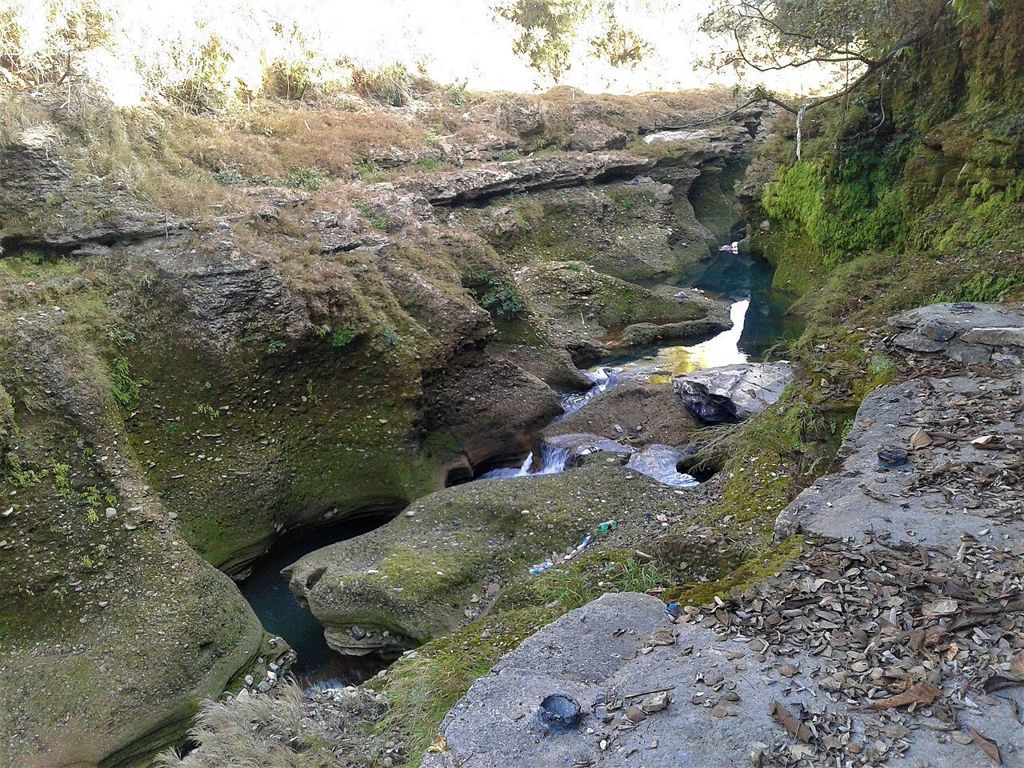
Stay behind the fences and on the marked paths at all times. The rock near the edge is smooth and often wet, and the drop is sheer. Keep a close hold on children.
Gupteshwor Mahadev Cave
Gupteshwor Mahadev Cave lies directly across the road from the falls. Its entrance is built over with a temple structure, and a spiral of steps leads down into the ground. The cave is dedicated to Shiva, worshipped here as Gupteshwor Mahadev, and a natural rock formation inside is revered as a lingam, the form in which Shiva is worshipped.
Also by the lake: The old bazaar and Bindhyabasini
The shrine area is an active place of worship. Pilgrims come to make offerings, especially on festival days dedicated to Shiva, when queues can be long. Photography is generally not permitted in the shrine section; follow the signs and the instructions of any attendants. Dress modestly and speak quietly.
Down to the water
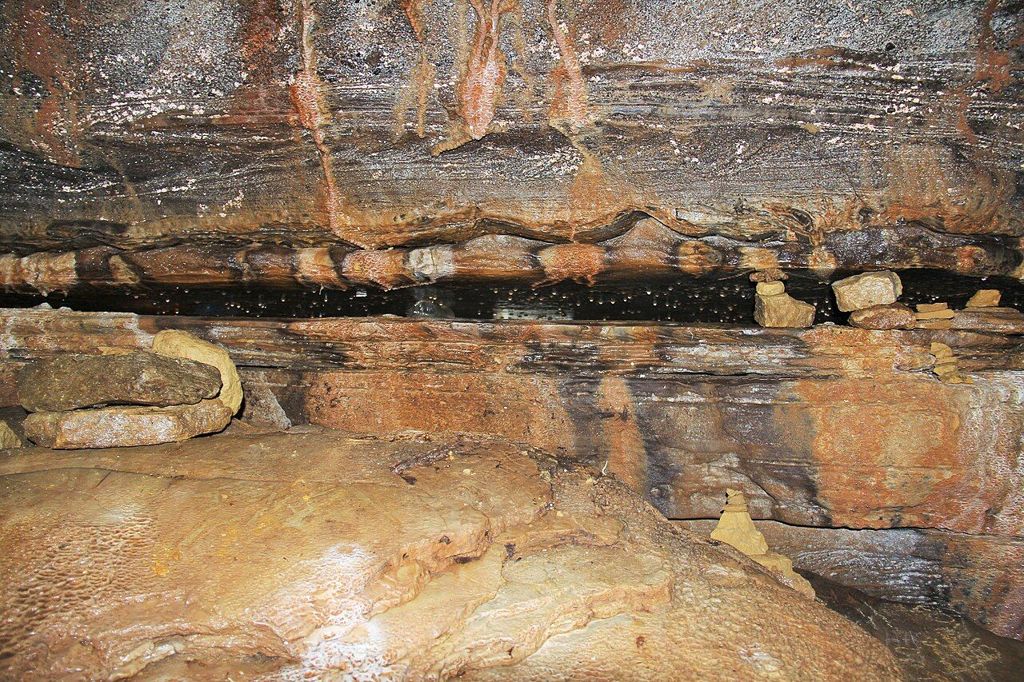
Beyond the shrine, a separate part of the cave continues further down. The passage is damp, uneven and dimly lit in places, with low ceilings and slippery steps, and you may need to stoop. At the bottom, in suitable conditions, you can see the river falling into the cave from above, the same water that disappeared at Davis Falls across the road. It is an extraordinary sight, and a rare chance to see a river from underneath.
This lower section may be closed during the monsoon, when water levels are high and the passages flood. Wear shoes with good grip, carry a small torch, and do not go further than the marked route. Entry to the cave usually requires a ticket, with separate arrangements sometimes applying to the lower section.
Monsoon power and the best time to visit
For the most dramatic falls, come in late summer or early autumn, from about August to October, when the monsoon rains have filled Phewa Lake and the river runs high. In September the roar can be heard from the road. The trade-off is that the lowest parts of the cave may be closed, and paths are wet.
In the dry season, from late autumn to spring, the falls are much smaller but the rock carvings of the river bed are easier to see, and the cave's lower passage is more likely to be open. Either way, the two sites together take about two hours.
- Both sites are a short taxi ride south of Lakeside. Buses also run along the main road.
- Bring small notes for tickets and offerings.
- Expect crowds at weekends and on holidays; go early on a weekday for quiet.
- Combine the visit with the walk up to the World Peace Pagoda from the dam side, which starts nearby.
The river you see vanish here begins as the outflow of Phewa Lake, so a morning on the water and an afternoon at the falls tells the whole short story of that stream.
Where exactly the water runs once it enters the rock is hidden from view. Standing at the edge of the gorge, listening to a river go underground, is the strange heart of a visit here.