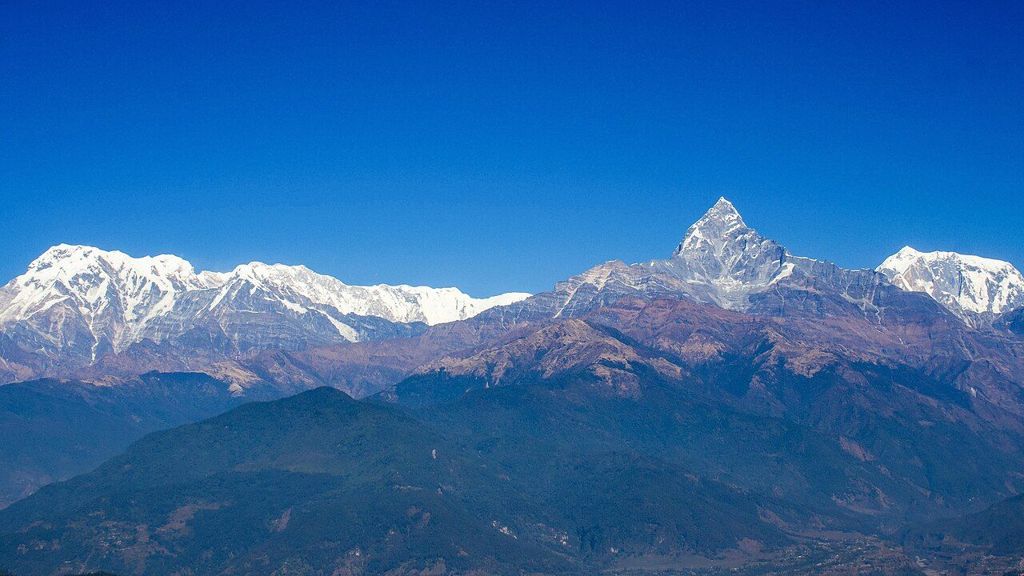
Before dawn, people climb or ride to the hilltop above Phewa Lake to watch the first light reach the Himalaya. Go on a clear morning, then walk back down through the villages to the lake.
Getting there: Taxi up before dawn, or steep walk
Bring: Warm layer, torch, water, walking shoes, small notes
Mountain view: Dhaulagiri, Annapurna South, Machhapuchhre and the Annapurnas on clear dry-season dawns; often lost in cloud from June to September.
Sarangkot is the hill that rises steeply above the northern shore of Phewa Lake. Its top, at roughly 1,600 metres, is the most popular sunrise viewpoint in Pokhara, and for good reason. From the summit you look north across a deep valley straight at the Himalaya, close enough to see the shape of each peak. On a clear morning the first light turns the snow pink, then gold, then white, while the lake and the city below are still in shadow.
The name is often linked to the remains of an old hilltop fort; "kot" means fort in Nepali. Today the summit area has viewing platforms, steps and a small village spread along the ridge.
Sunrise is not a secret, and on clear autumn mornings the platforms can be crowded. Arrive early enough to find a spot at the railing, and be patient with other people's cameras. The crowd thins quickly once the sun is up.
Getting up before dawn
To see the sunrise you need to be at the top before the sun is. That usually means leaving Lakeside in the dark. Most people take a taxi up the road that winds to a point near the top, followed by a short climb on stone steps. Arrange the taxi the evening before, and agree the price and whether the driver will wait.
You can also walk up. Trails from the Lakeside area and from the north side of the lake climb steeply through the villages, and the ascent takes a couple of hours or more depending on your pace and route. Walking up in the dark needs a good torch and some confidence on rough steps, so many walkers prefer to ride up for sunrise and walk down afterwards. There may be a small fee for visitors at the viewing area.
What you see at sunrise
The panorama runs along most of the northern horizon. Far to the west, Dhaulagiri, one of the world's highest mountains, stands apart from the rest. Closer in and to the north are Annapurna South and Hiunchuli, and then Machhapuchhre, the sharp, fish-tailed peak that rises almost directly above Pokhara and is considered sacred, with climbing to its summit not permitted. Further east the Annapurna massif continues towards the Lamjung Himal.
The light changes quickly. The highest summits catch it first, and within a few minutes it slides down the snow faces. Below, mist often lies in the valleys and over the lake, burning off as the sun climbs. Stay for half an hour after sunrise; the views in full light are clearer and often better than the moment of dawn itself.
Weather and seasons
The view depends completely on the sky. From October to December, after the monsoon has cleared the air, mornings are often crisp and clear. Winter brings cold dawns, so bring a warm layer even if the lake shore felt mild the evening before. Spring mornings are frequently hazy, with the peaks faint or hidden, though clear days do happen. In the monsoon, roughly June to September, cloud and rain usually cover the mountains entirely.
Also by the lake: Phewa Lake and the island temple
Check the sky the night before: a clear, starry evening is a good sign. If the morning is cloudy at the top, wait a little; gaps sometimes open. If they do not, the walk down is still worth it, and the views of the valley and the lake are good on most days.
Paragliders later in the morning
Sarangkot is also known as one of the main paragliding launch sites in Nepal. The take-off area sits on the slope below the summit, facing the lake. Flying begins later in the morning, once the sun has warmed the ground and the air starts rising; at dawn you will not see the wings. By mid-morning the sky above the lake fills with colourful canopies drifting down towards landing areas near the shore.
If you want to fly, choose a licensed operator, check that equipment and pilots meet the required standards, and ask about insurance and weather policies before you pay. Watching from the slope near the launch area is free, but keep well back and out of the way.
Walking down to the lake
The walk down from Sarangkot is one of the best short walks around Pokhara. Paths descend through the ridge villages, past houses, small fields and woods, with the lake opening below you. Depending on the route, you reach the Lakeside area or the northern shore of the lake in about two hours, mostly on steep stone steps.
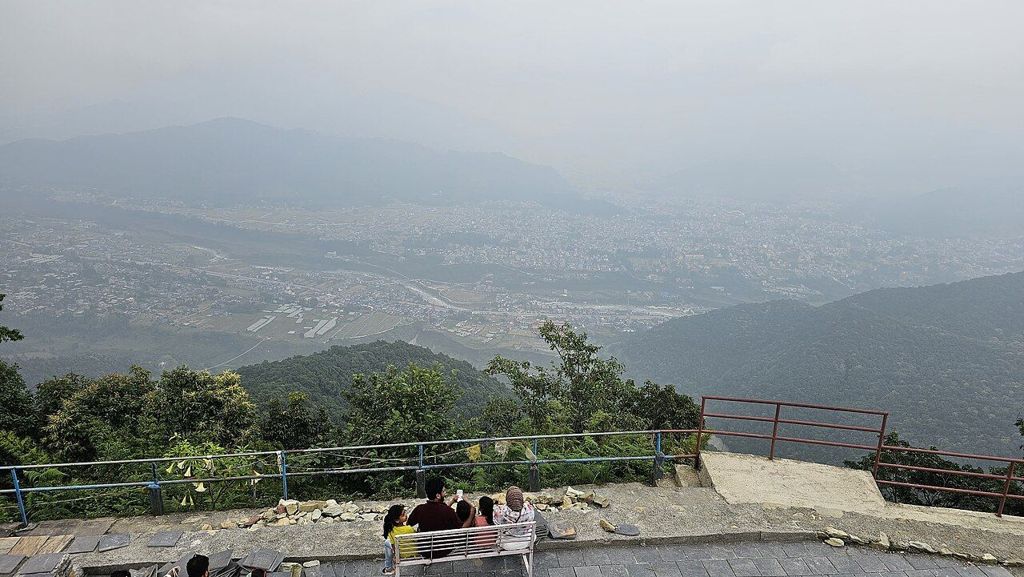
The steps are hard on the knees, and trekking poles help. Carry water and snacks, take care on loose or damp sections, and ask in the villages if you are unsure of the way, as several paths branch off. Respect people's homes and fields: stay on the main path and do not wander through yards.
Halfway down, the slope opens out above the lake and the paraglider launch area, and you can watch the first flights pass below and beside you. It is worth pausing here before the final, steepest section to the shore.
Combining it with other outings
An early start at Sarangkot leaves the rest of the day free. You could rest by the lake and then row out in the afternoon to Tal Barahi temple on Phewa Lake, or head across the water for the evening view from the World Peace Pagoda. Those who want quieter country can spend another day around Begnas and Rupa lakes east of the city.